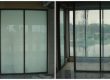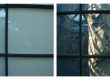
How the Nano Film “Cloaks” the Display: The Circular Polarizer Trick
This is a brilliant application of polarization optics. Here’s the step-by-step principle:
1. Film Structure:
The “cloaking” film is a circular polarizer laminated onto the display’s outer surface. It consists of two key nano-scale layers:
- A linear polarizer (like the one inside the LCD).
- A quarter-wave plate (λ/4 retarder), a birefringent layer that shifts the phase of light waves.
2. The “Cloaking” Path (When Display is OFF):
This is where the magic happens.
- Ambient unpolarized light enters the circular polarizer from the outside.
- It first passes through the linear polarizer, becoming linearly polarized (vibrating in one plane).
- It then passes through the quarter-wave plate, which converts it into circularly polarized light (the electric field rotates in a spiral, say, clockwise).
- This circularly polarized light hits the highly reflective layers of the display (e.g., the metal back electrode).
- Crucial Point: Upon reflection, the handedness of circular polarization flips. Clockwise becomes counter-clockwise.
- The reflected, counter-clockwise circular light now passes back through the quarter-wave plate. This converts it back into linearly polarized light, but with its polarization axis rotated by 90 degrees relative to the original.
- This 90°-rotated, linearly polarized light now encounters the linear polarizer layer again. Since a polarizer blocks light polarized at 90° to its axis, the reflected light is completely blocked.
Result: With the display OFF, almost zero ambient light is reflected back. The screen appears as a perfect, dark black rectangle—it is “cloaked,” blending into a dark phone bezel. This is why high-end smartphones have such deep, inky blacks when idle.
3. The “Transmission” Path (When Display is ON):
The display’s own generated light is managed differently.
- Light from the LCD’s backlight (already polarized and modulated by the LCD’s internal polarizers) exits the display panel.
- It passes through the quarter-wave plate on the film, becoming circularly polarized.
- It then passes through the linear polarizer of the film with minimal loss (as it’s simply being converted from circular to linear).
- This light reaches your eyes unimpeded.
Because the film has almost perfectly eliminated the competing ambient reflection, the contrast ratio of the ON image under bright light is dramatically improved. The image appears vivid even in sunlight.
Visual Analogy: A One-Way Mirror for Polarization
Think of it as a one-way gate for light based on its polarization state.
- Ambient Light: Sent in, transformed, and trapped inside upon reflection.
- Display Light: Allowed to pass out freely.
Application to Different Displays:
- LCDs: Benefit immensely. The circular polarizer film is often integrated directly during manufacturing.
- OLEDs: Since OLED pixels emit their own light and are less reflective inherently, they don’t need this film to function. However, adding a circular polarizer is the primary method to achieve superior sunlight readability and “cloaking” when off. The trade-off is a slight reduction in maximum brightness and color saturation.
- LED Billboards/Large Format: Some advanced privacy or anti-glare screens use similar polarizing nano-films to control viewing angles and reduce washout from ambient light.
Summary: What the Nano Cloaking Film Actually Does
| Action | Mechanism | Result |
|---|---|---|
| “Cloaks” OFF-State Display | Uses circular polarization to block reflected ambient light. | Screen appears as a perfect, non-reflective black surface. |
| Enhances ON-State Image | Transmits display-generated light while suppressing ambient reflections. | Drastically improved contrast and sunlight readability. |
| It does NOT: | Block, dim, or alter the display’s own emitted light intentionally. |
Conclusion: The so-called “nano cloaking film” for displays is a sophisticated polarization-management layer. Its primary function is ambient light rejection, not true optical cloaking of the device’s physical shape. By making the screen a “black hole” for external light when off, it creates the illusion of the display being seamlessly cloaked into the device’s body, while serving the critical practical function of improving visibility in bright environments.