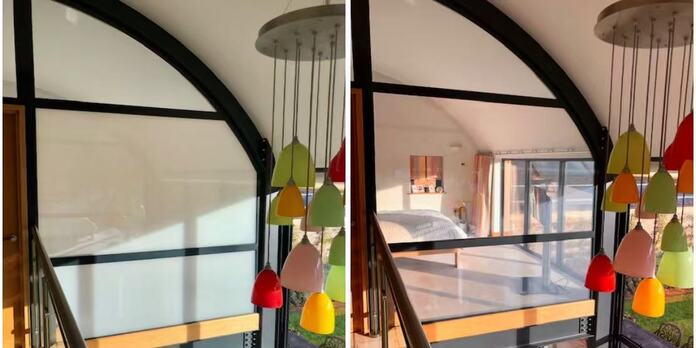
Switchable smart glass has become popular in hotel interior design because it solves a classic problem: how to make a space feel open and luxurious while still offering instant, flexible privacy. It’s a perfect blend of form and function that elevates both the guest experience and the hotel’s operational efficiency.
The Guest Experience: A Touch of Modern Luxury
For guests, the appeal is immediate and memorable. The technology itself—most commonly using PDLC (Polymer-Dispersed Liquid Crystal)—allows the glass to switch from clear to frosted at the flick of a switch or with a voice command, creating an “instant wow” factor.
Dynamic Privacy: This is the core driver. Hotels are using it for bathroom partitions in guest rooms, allowing natural light to flood the bedroom and make the space feel larger when the glass is clear. With a simple switch, it becomes opaque for total privacy, eliminating the need for bulky curtains or blinds.
Enhanced Comfort: Guests gain control over their environment. They can enjoy the openness and light, or secure privacy instantly, without dealing with hardware.
Design & Operational Wins
Beyond the guest’s experience, smart glass offers significant advantages to hotel designers and operators, which is why its adoption has surged (with one supplier reporting a 154% increase in hospitality orders).
Maximizing Space and Light: In an industry where square footage is precious, smart glass creates the illusion of a larger, more open room. By dissolving visual barriers, it allows daylight to penetrate deeper into the space, making even compact rooms feel more inviting and spacious.
A Clean, Minimalist Aesthetic: The technology fits perfectly with modern design trends. It creates sleek, uncluttered interiors without the visual interruption of curtain tracks or blinds, delivering a high-end, sophisticated look
Practical and Hygienic: From an operational standpoint, glass is far easier to clean and maintain than fabric curtains, which can harbor dust and allergens. This makes it a more hygienic option for a high-traffic environment
Versatility in Application: Beyond the bathroom, its uses are expanding. Hotels are using it for room dividers in suites, in meeting rooms for instant privacy, and even as projection screens for events and branding. It’s even being used in lobbies with embedded logos or artistic designs to create stunning, dynamic displays.
In essence, switchable smart glass allows hotels to offer a premium, adaptable experience that feels cutting-edge, while also streamlining design and maintenance. It’s a key tool in creating the “Hotel Room of the Future” that feels both high-tech and comfortably luxurious.