Nano cloaking films are advanced materials designed to render objects invisible or undetectable by manipulating light and electromagnetic waves. Instead of a single product, this term describes several emerging technologies, each engineered for specific applications. The table below summarizes the primary types and their most significant use cases.
| Application Area | Core Technology / Material | Key Benefits | Primary Use Cases | Technology Readiness Level |
|---|---|---|---|---|
| Military & Personal Camouflage | Au nanoparticle-based skin-like metamaterial | High visible absorptivity, ultralow infrared emissivity, breathable, stretchable | Soldiers’ uniforms (hiding from IR), concealing military vehicles/equipment | Advanced Prototype |
| Robotics & Smart Wearables | Stretchable liquid metal composite ink (LMCP) | Maintains performance while stretching up to 12x, changes properties with movement | Robot skin for stealth operations, body-conformal devices, adaptive camouflage | Prototype |
| Medical Devices & Bio-Imaging | Scattering-cancellation coating (e.g., silicon-based) | Non-invasive, reduces scattering of light around probes | Improved optical nanoprobes for internal imaging, non-invasive surgeries | Early Research |
| Telecommunications & Privacy | Broadband metamaterial cloak (multilayer plasmonic) | High scattering reduction across visible spectrum, scalable manufacturing | Antenna decoupling (5G/6G), RFID/surveillance shielding, laboratory instruments | Conceptual / Lab Demo |
Telecommunications and Privacy Protection
On a larger scale, these materials can manage signals in our tech-filled world.
- Antenna Efficiency: In dense 5G/6G networks, cloaking films can shield antennas from interference, allowing them to operate more cleanly.
- Privacy Screens: For consumers, Nano cloaking film can block RFID scanners or create physical barriers that hide screens from prying eyes
How Nano Cloaking Film Works for Screen Privacy
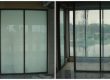
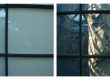
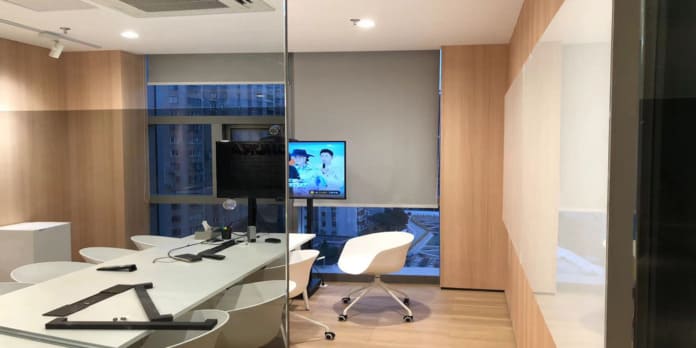
When applied to a glass wall or window, nano cloaking film selectively blacks out digital screens behind it. The microscopic structures within the film are precisely engineered to interact with the specific light frequencies emitted by LED/LCD displays –Here’s what happens:
- For screens: Light from your monitor is scattered or diffused, making the content unreadable to anyone viewing from the side.
- For everything else: The rest of the room (people, furniture, windows) remains clearly visible .
- No power needed: The film is passive – it works instantly upon installation with zero electricity .
Key Applications
Corporate Offices
- Conference rooms: Keep presentations, video calls, and sensitive discussions private from hallway passersby
- Executive offices: Provide privacy while maintaining the open-plan aesthetic
- Open work areas: Protect monitors from visual hacking by neighboring desks
Financial Institutions
- Trading floors: Shield real-time market data and client positions
- Branch offices: Maintain client privacy during financial consultations
Healthcare Facilities
- Patient consultation rooms: Protect medical records and patient information displayed on screens
- Administrative areas: Safeguard confidential data while keeping visibility for safety
R&D and Manufacturing
- Labs and workshops: Hide CAD designs, blueprints, and sensitive prototypes from visitors or external views
- Intellectual property protection: Prevent visual hacking in areas where proprietary information is displayed
Government and Secure Facilities
- Ensure classified information on screens remains confidential even in glass-walled spaces
Installation Considerations
- Ease of application: Nano cloaking film is generally more forgiving to install than micro-louver films – small errors in alignment are less likely to create visibility gaps .
- Glass compatibility: Works on flat, curved, and even tinted glass surfaces.
- Durability: Uses pressure-sensitive acrylic adhesives designed for long-term application