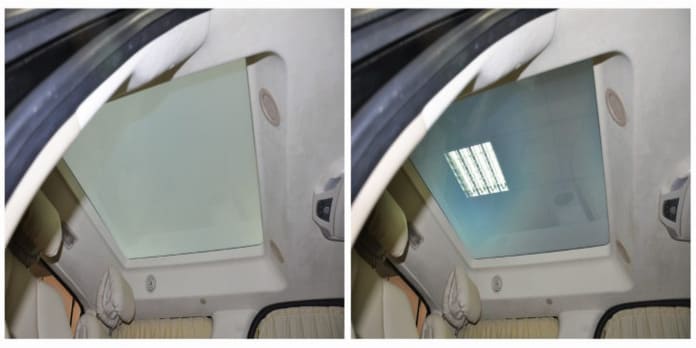
A Comprehensive Breakdown of the Fifth Dimming Technology (DLS) – Core Performance & Differentiated Advantages
Below is a thorough analysis of the fifth dimming technology (referred to as DLS, representing Dye, Liquid Crystal, and Suspended Particle technology), comparing it against the four traditional dimming technologies and examining the core logic behind its iterative application development.
DLS Dimming vs. Traditional SPD (Mainstream Sunroof Technology)
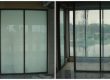
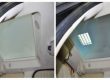
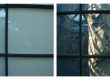
Both technologies deliver highly similar visual effects in both off and on states: transparent in the off state with approximately 30% haze, and low haze in the on state with excellent off-angle viewing performance. The core differences lie in voltage, contrast ratio, cost, and application scenarios:
Superior Driving Voltage: DLS operates at 24-36V, significantly lower than SPD’s 90-110V, making it better suited for automotive low-voltage systems with enhanced safety.
Lower Mass Production Cost: The manufacturing process is highly streamlined with low entry barriers, offering significant advantages in large-scale production.
Performance Trade-off: SPD achieves a contrast ratio of up to 100:1, outperforming DLS which is limited to within 30:1.
Scenario Differentiation: SPD is ideally suited for automotive sunroofs, while DLS is precisely targeted at vehicle side windows, focusing on the three core needs of side windows—visual clarity, moderate privacy, and heat insulation—to capture the vast incremental application market for automotive side window dimming in China.
DLS Dimming vs. Traditional PDLC (Mainstream Dimming Technology)
The emergence of DLS is fundamentally aimed at addressing the key shortcoming of DPDLC (dye-doped PDLC)—its opaque off-state—achieving complementary technological iteration:
Off-State Innovation: DPDLC is completely opaque in the off-state, blocking visibility, whereas DLS remains fully transparent throughout the off-state, completely resolving the sense of confinement and obstruction common with traditional dimming glass.
Superior On-State Image Quality: Haze levels drop to below 1% in the on-state, with excellent off-angle performance, delivering pure and crystal-clear visual transparency.
Lower Voltage: Operates at 24-36V, lower than PDLC’s 60-72V, resulting in lower energy consumption and better system compatibility.
Better Mass-Production Cost-Effectiveness: Simpler manufacturing processes enable easier and more cost-effective large-scale production.
Performance Trade-off: The latest DPDLC technology can achieve a contrast ratio of up to 100:1, higher than DLS.
Application Segmentation: DPDLC is suitable for sunroof applications, while DLS precisely targets the vehicle side window segment
DLS Dimming vs. Traditional LC (Side Window Benchmark Technology)
Both technologies are side-window compatible solutions, but DLS is positioned to address the side-window application market that LC cannot fully serve, offering high cost-effectiveness for mass-market production vehicles:
Outstanding Cost Advantage: Production costs are far lower than LC, making it ideal for large-scale mass production.
Comparable On-State Performance: Low haze and excellent off-angle viewing performance deliver a passenger visual experience comparable to LC dimming.
Performance Trade-off: LC offers superior off-state transmittance, haze, and contrast ratio performance, making its overall performance better than DLS.
Strong Market Adaptability: For the majority of mass-production vehicle models in China, DLS offers low cost and high stability, positioning it as the best accessible solution for automotive side window dimming in the Chinese market.
DLS Dimming vs. Traditional EC (Sunroof Benchmark Technology)
These two technologies do not compete in the same side-window application segment; each has its own strengths. EC offers higher contrast ratios and better heat insulation performance, while DLS provides faster response speeds and lower application costs.